Insights
Governing AI, in practice.
Plain, useful writing for boards and leadership teams. Filter by topic, industry or format.
Browse by topic
AI governance for UK boards
Boards are accountable for AI whether or not they understand it. Our writing for directors on the duties, decisions and evidence that AI now puts on the board's agenda — from defining scope to the records an auditor will ask to see.
Explore AI governance for UK boardsResponsible AI in practice
Governance that lives in the code, not the slide deck. The controls we build into real AI systems — read-only data access, confidence floors, append-only audit ledgers, anti-hallucination checks — and what they look like in production.
Explore Responsible AI in practiceSector playbooks
AI governance is not generic. Each regulated sector carries its own regulators, risks and board questions. These playbooks work through what AI governance means in specific UK sectors, grounded in the rules that apply.
Explore Sector playbooksThe Intelligence Age
The bigger picture: governing an organisation as AI reshapes the pace and nature of decisions. Board-level theses on accountability, the pacing problem, and leading through the intelligence age.
Explore The Intelligence AgeFree reports
AI Governance for UK Boards
A practical primer for directors: why AI is now a board issue, the questions to ask, and the frameworks you can align to.
Download PDF
Responsible AI in Practice
How governance is engineered into the code: the six controls we build into AI systems, and what they look like in production.
Download PDF
AI in Regulated UK Sectors
A field guide for financial services, the public sector and the professions: the rules that already bind your AI today.
Download PDF
Why AI Projects Fail: The Evidence
The failure statistics boards actually get quoted, with what each one really measured, the six failure modes behind them, and the questions that prevent a repeat.
Download PDF90 results

AI governance framework for universities
A governing-body AI framework for higher education: the policy skeleton, council and senate decision rights, OfS and QAA duties, and the evidence to ask for.

Board AI training: a 90-minute agenda
A minute-by-minute agenda for a 90-minute board session on AI risk: the pre-read, the six segments, the artefacts to have in the room, and the decisions to minute.

AI agents for business operations: what works, what fails
What AI agents can actually run in operations today, what separates a production agent from a chatbot demo, and why so many agent projects get cancelled.

AI for accountancy firms: a governed adoption playbook
Where AI genuinely saves time in a UK accountancy practice, what ICAEW and the FRC actually require, and the governance wrapper and 90-day path to adopt it safely.

AI invoice processing: how it actually works end-to-end
How modern AI invoice processing really works — multi-source extraction, deterministic finance controls, reason-coded post-or-query decisions — and why OCR-plus-RPA fell short.

Custom software for small business UK: when it pays
When bespoke software is the right buy for a small, high-value UK business: the spreadsheet ceiling, an off-the-shelf-versus-custom framework, what custom costs in the UK, and how to scope a first build.

Fractional CTO cost UK: the 2026 pricing guide
What a fractional CTO actually costs in the UK — day rates, retainers and hourly fees, how it compares with a full-time CTO's loaded cost, and when part-time technical leadership is the right buy.

Outsourced AI team vs hiring in-house: the SME decision
For SME leaders weighing an in-house AI team against an outsourced one: the real cost of hiring AI engineers in the UK, time-to-hire, the governance gap most dev shops leave, and a decision framework.

Replace Excel with custom software: a staged path
How to tell when your business has outgrown its master spreadsheet, why spreadsheets fail as systems of record, and a staged migration to custom software that keeps the sheet running while the system takes over.

White label AI development: a guide for agency owners
How white label AI development works for agencies and consultancies — when it beats hiring, what to demand from a partner, pricing models, and the red flags to avoid.

ADM assessment for board approval under UK GDPR
How UK boards should approve automated decision-making under Articles 22A to 22D, with the controls and evidence to put in the pack.
AI go-live checklist for regulated organisations
A board-ready pre-launch checklist for regulated AI: decisions, evidence, controls and regulator mapping before an AI system goes live.

AI governance assurance map for boards
A board-ready assurance map connects AI risks, controls, owners and evidence so audit committees can test whether governance is operating.

AI governance checklist for charity trustees (free, 2026)
The free checklist charity trustees can table at the next board meeting: the decisions to make on permitted AI uses, donor and beneficiary data, Charity Commission expectations, and who signs off — with the mistakes that catch boards out.
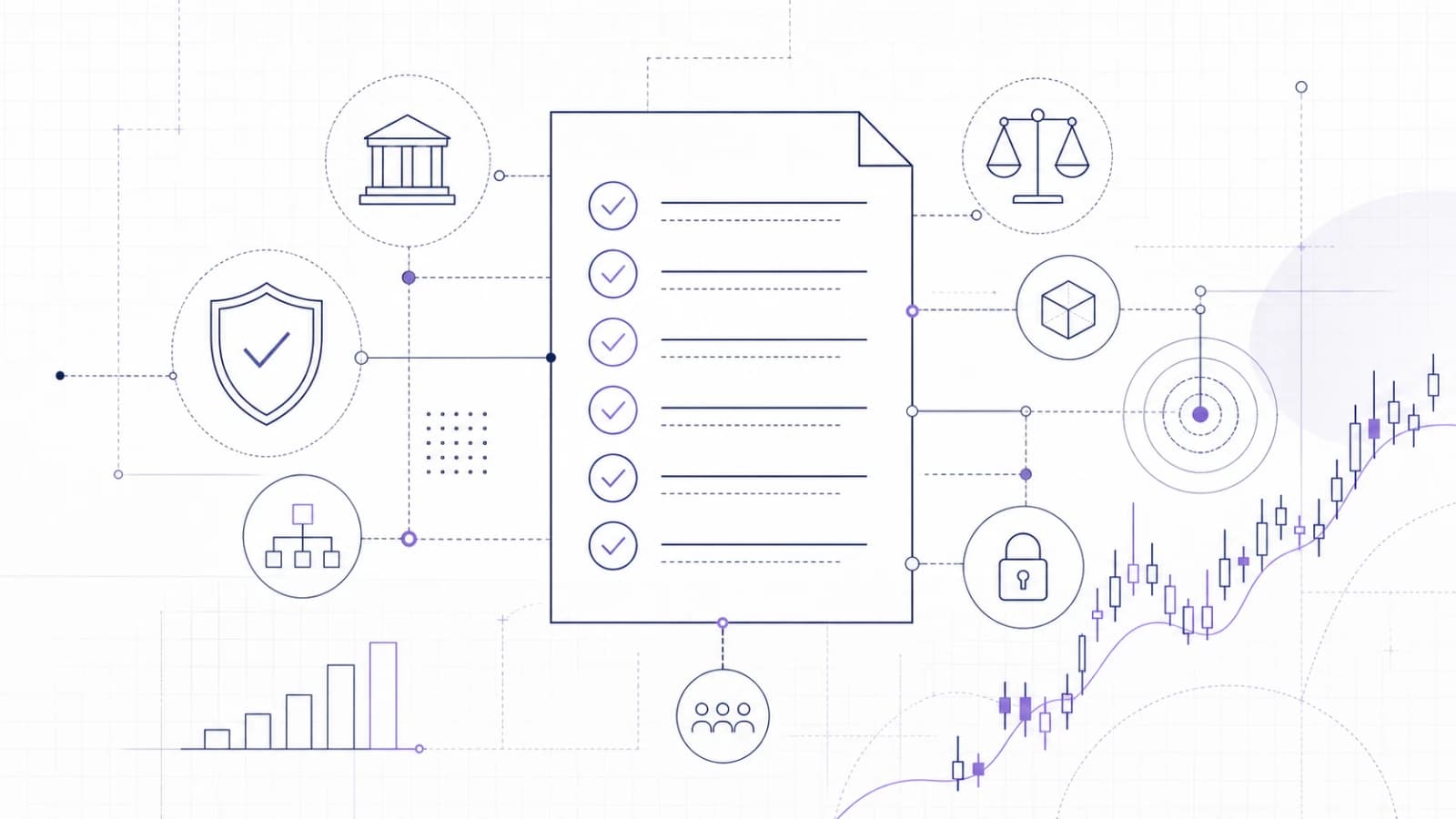
AI governance checklist for financial services boards
A board-ready checklist for FCA and PRA firms, mapping AI use cases to accountability, customer outcomes, model risk, resilience and data rights.

AI governance consultancy pricing UK guide
How UK boards should budget for AI governance consultancy: cost drivers, engagement types, deliverables and buying tests that protect value.
AI governance consultancy vs build shop
When UK boards should choose advisory governance, software delivery or an integrated team for AI work with regulatory evidence.

AI governance diagnostic cost: what drives the fee
What UK boards should expect to pay for an AI governance diagnostic, what changes scope, and when to start with a scorecard.
AI governance evidence pack for UK boards
What boards should collect before approving, auditing or reporting on AI systems, from control evidence to regulator mapping.

AI governance for local authorities
What councils, cabinets and scrutiny chairs should require before AI touches residents' services, procurement or public decisions.
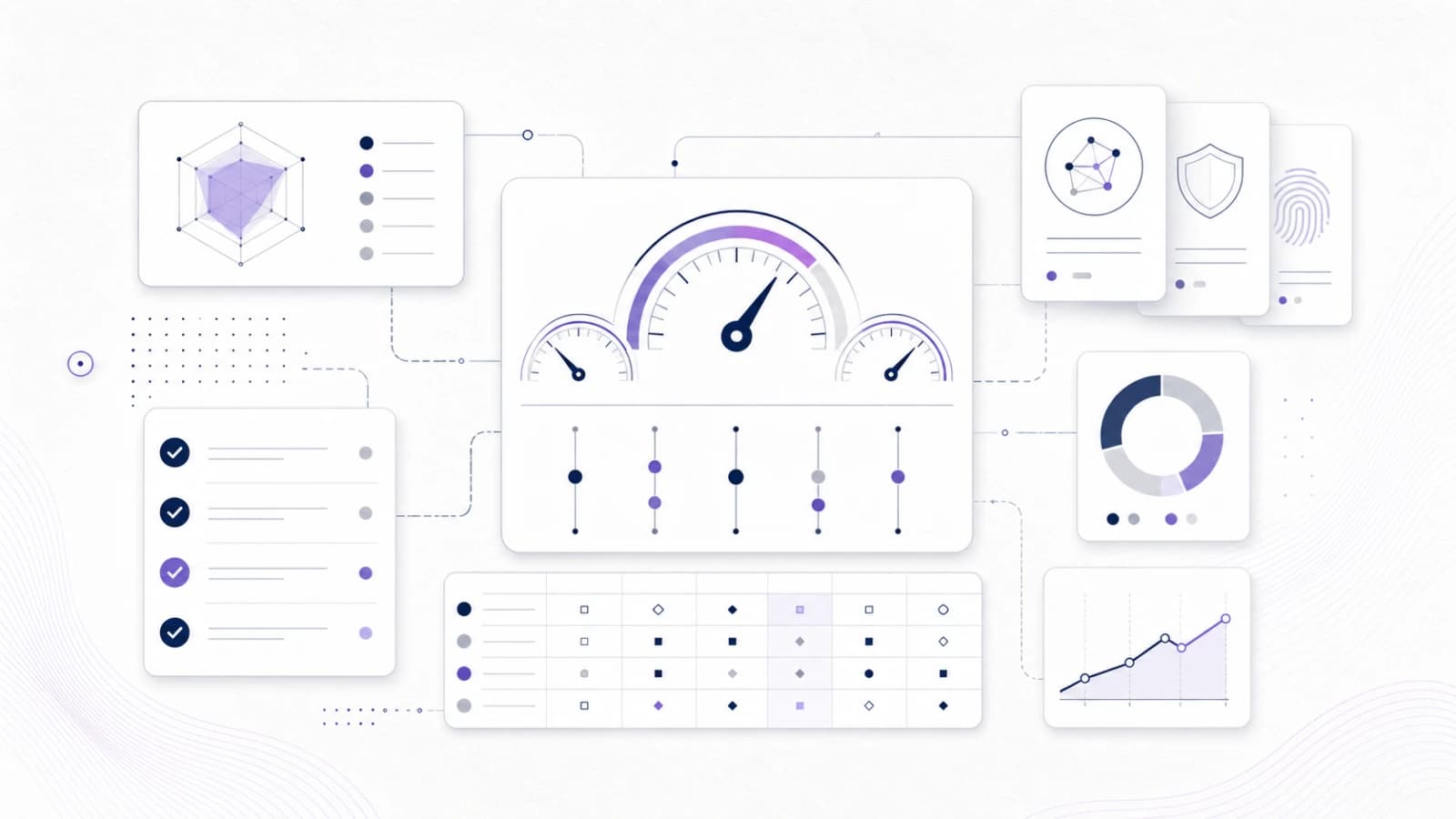
AI governance KPIs for boards
Measure AI governance with board-ready KPIs that connect use cases, controls, evidence, incidents and decisions to accountable owners.

AI governance maturity model for UK boards
Assess AI maturity by controls, evidence and assurance rather than vendor scores or vague policy self-assessments.

AI governance for professional services firms
A sector playbook for partners who need evidence-led AI controls across legal, surveying, audit and advisory work.
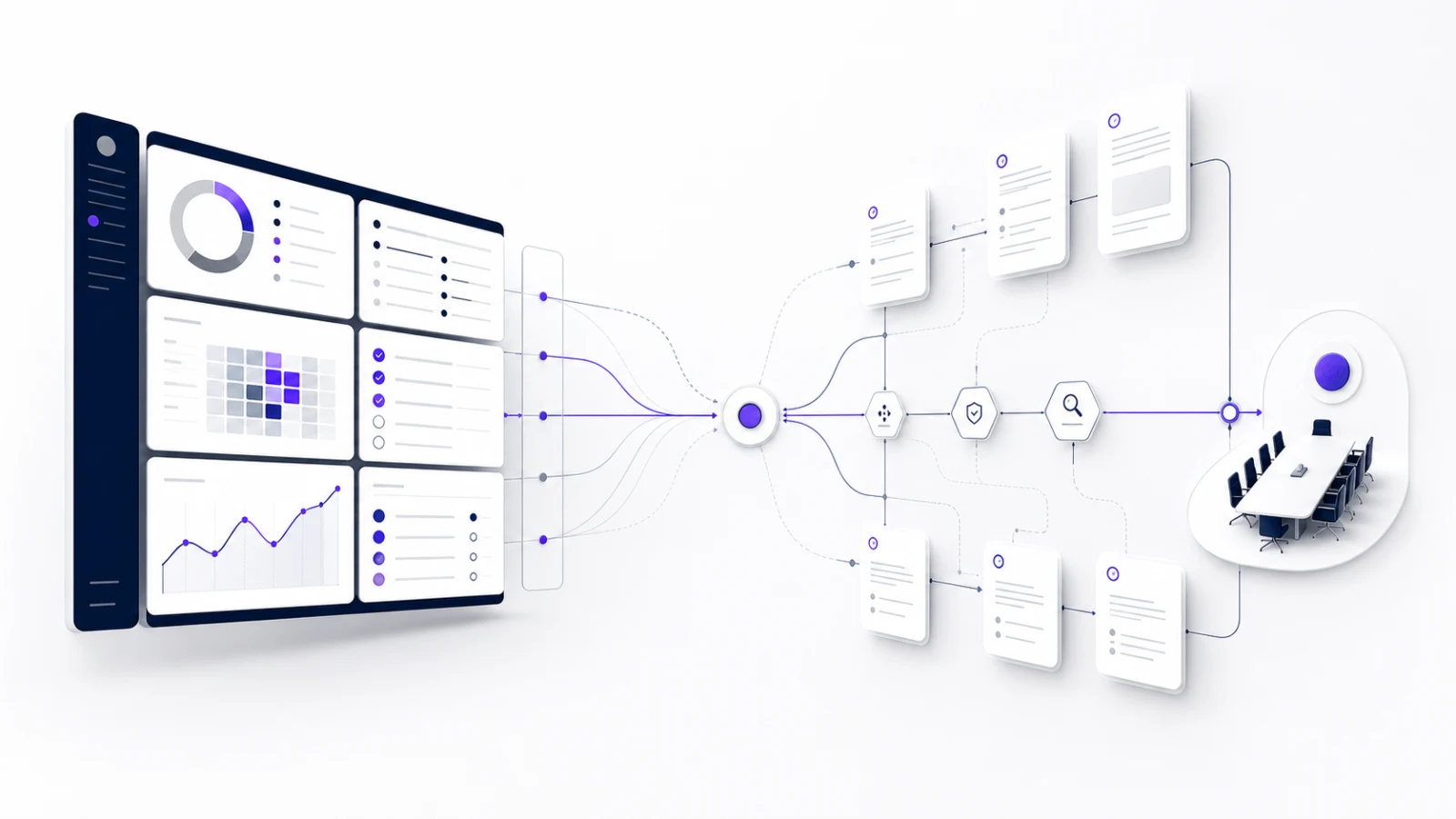
AI governance software vs consultancy
Software records and monitors AI use; consultancy sets accountability and judgement. A board guide to choosing the right mix.

AI incident response plan for UK boards
A board-ready response plan for AI incidents, covering data leakage, model failures, harmful output, ADM issues and reportable routes.

AI model governance controls for UK boards
What AI model governance means for UK boards: named ownership, versioning, drift monitoring and evidence mapped to ISO 42001 and NIST AI RMF.

AI model risk governance FCA firms
A board-level playbook for FCA-regulated firms governing AI models through SS1/23, Consumer Duty, SM&CR and evidence-led controls.
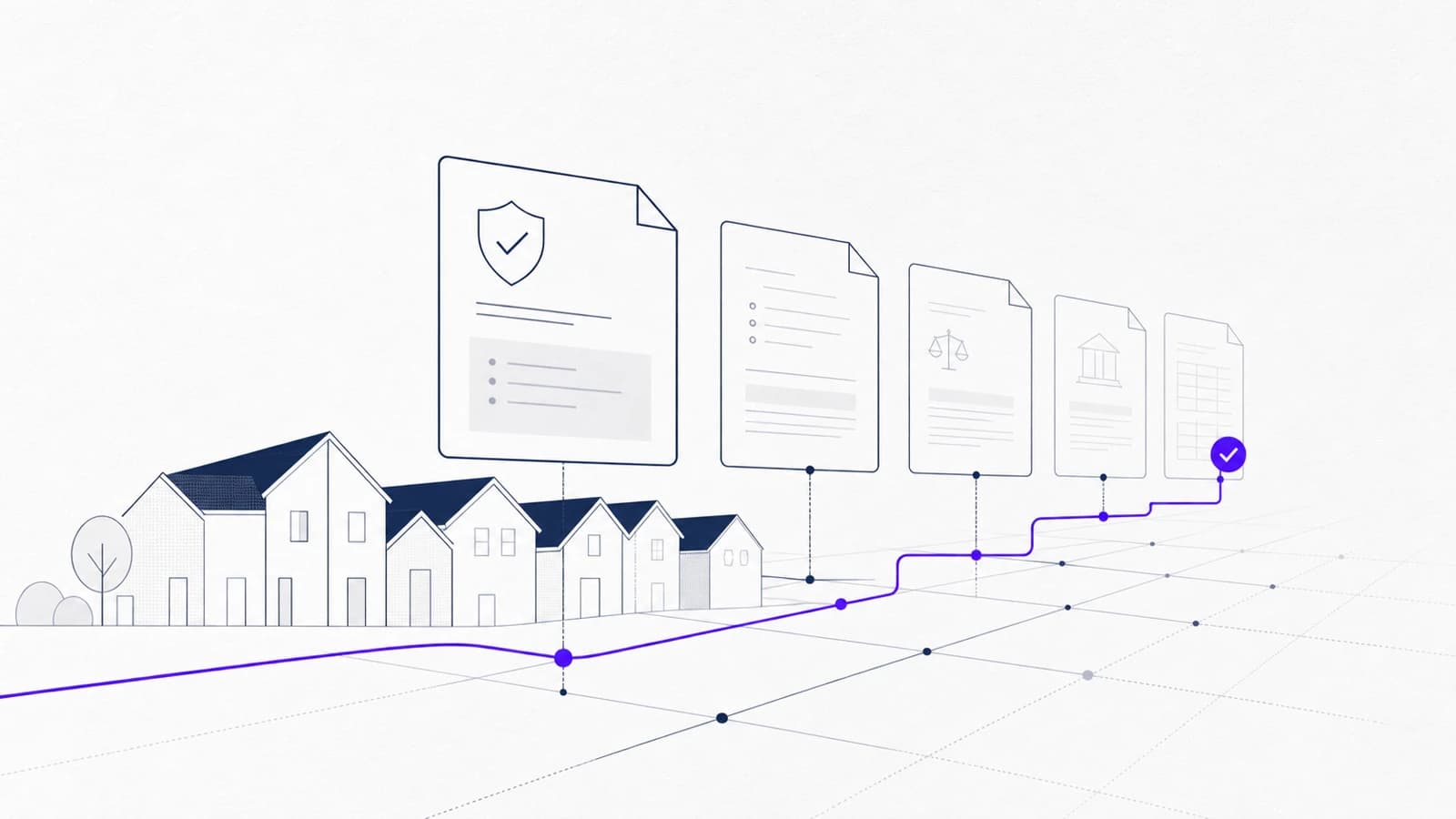
AI policy template for housing associations
A board-ready AI policy checklist for housing associations covering tenant outcomes, evidence, regulators and human review.
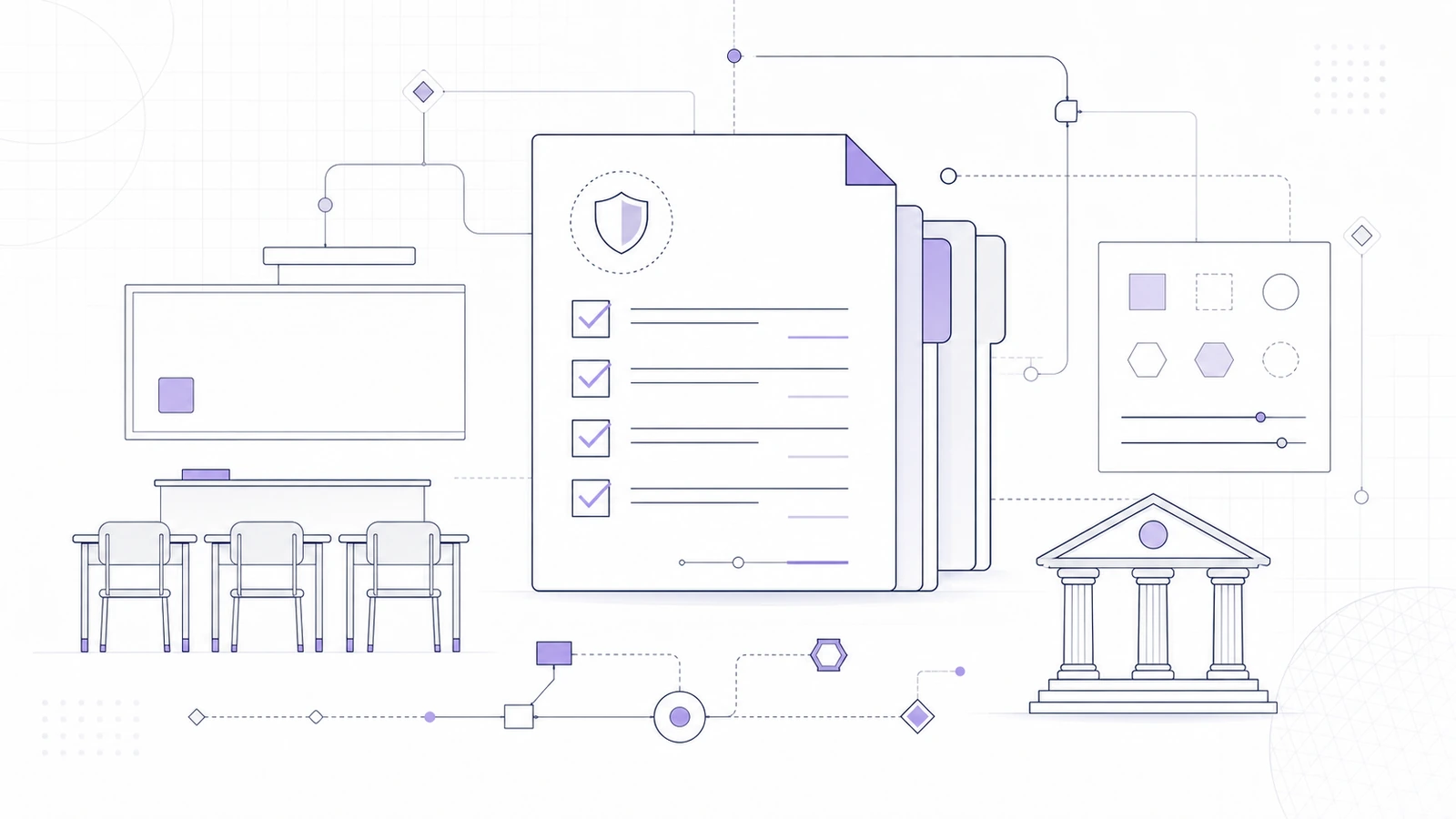
AI policy template for schools and colleges
A practical template for school governors, MAT trustees and college boards covering DfE guidance, safeguarding, data protection and assessment.
AI procurement checklist for local authorities
A council-ready checklist for buying AI: procurement route, DPIA, ATRS, NCSC, supplier evidence and cabinet controls before award.

AI risk assessment template for boards
A board-ready template for assessing a proposed AI use before approval, with evidence, owners and framework mapping.

AI risk register template for boards
A board-ready AI risk register structure with fields, owners, evidence, review cadence and mappings to NIST, ISO 42001 and UK GDPR.
AI source citation controls for board evidence
How boards should require citation controls that prove AI answers trace back to real sources before they reach regulated work.

ATRS checklist for UK board approval
A board-ready checklist for deciding whether an ATRS record is mandatory, what evidence to clear and how it maps to UK AI governance.

Big Four alternatives AI governance
A board buyer's guide to choosing Big Four or specialist AI governance advisers, with controls, framework mapping and evidence to demand.

EU AI Act consultancy UK: what to buy (and what to refuse)
Buying EU AI Act advice for a UK organisation? The scope tests, dates and evidence a serious consultancy must produce — and the red flags that mean you are paying for commentary.

Failed AI project rescue: a board triage guide
How boards in regulated organisations decide whether to stop, contain or recover a failing AI project, with evidence, controls and reporting.

FCA AI governance SM&CR accountability
How FCA-regulated firms should evidence AI ownership under SM&CR, Consumer Duty, model risk and UK GDPR.
How to choose an AI governance partner
A board-level guide to selecting an AI governance partner, with a scorecard, evidence tests and framework mapping for UK organisations.

Human-in-the-loop AI design for boards
A board-level guide to placing named human judgement, evidence and escalation rights around AI-assisted decisions.

ISO 42001 consultant UK: board buyer guide
How UK boards should scope ISO 42001 consultancy, separate preparation from accredited certification, and demand evidence before audit.
ISO 42001 readiness assessment
How UK boards assess ISO 42001 readiness, gather evidence, map NIST and UK GDPR duties, and decide whether certification preparation is sensible.

NCSC cloud principles for AI governance
How UK boards can turn NCSC cloud guidance into evidence for AI systems, supplier assurance and ISO 42001 governance.

NHS AI governance board: what to approve first
A board-level NHS AI assurance playbook: clinical safety, DPIA, DTAC, MHRA classification, monitoring and ICB evidence before go-live.

Responsible AI consultancy UK: buyer's guide
How UK regulated-sector boards should select responsible AI advisers by testing governance evidence, shipped controls and framework fit.

Responsible AI Implementation Controls for Boards
The practical control set a board should require before AI is used in a regulated workflow, with evidence, owners and framework mapping.

RICS responsible AI standard: board guide
What the RICS AI standard requires from surveying firms, and the board controls needed before clients, insurers or regulators ask.

UK GDPR Article 22 automated decision-making: board controls
What Article 22A to 22D now require, and the controls UK boards should evidence before significant automated decisions go live.

AI acceptable use policy for UK boards
A board-level guide to acceptable AI use: permitted uses, prohibited data, approval routes, evidence, training and review.

AI board reporting: what UK directors need to see
A board-level reporting format for AI use, risk movement, control evidence and decisions, grounded in UK governance duties and recognised frameworks.

AI governance committee terms of reference
A board-ready ToR structure for AI oversight: remit, membership, reporting, controls, evidence, and framework mapping for UK organisations.
AI procurement checklist for UK boards
The board gates, supplier evidence, contract terms and risk-register handoff to use before buying or renewing an AI system.

AI risk appetite statement for boards
A board-level guide to setting AI risk appetite: decisions, controls, evidence, framework mapping and next steps for UK organisations.
AI Vendor Due Diligence Questions for Boards
A board-level checklist for testing AI suppliers: data use, model limits, assurance evidence, contract controls and post-go-live monitoring.

Board AI oversight: what directors need to see
A board AI oversight guide for UK directors: decisions, evidence, frameworks and controls that make AI accountable in the boardroom.

Board Paper Template for AI Approval
Use this board paper structure to approve AI work with clear decisions, evidence, owners and UK governance mapping.

DPIA for AI: a board guide before go-live
When an AI use case needs a data protection impact assessment, what the board should ask for, and how to turn it into evidence.

EU AI Act risk tiers: a board guide
A board-level guide to the EU AI Act's prohibited, high-risk, transparency and minimal-risk categories, with controls and next steps.

FRC AI Guidance for Boards and Audit: 2026 Checklist
FRC AI guidance for boards and audit committees, mapped: Provision 29 material controls, the FRC AI-in-audit rules, and the evidence your board needs.

Generative AI policy template UK: board guide
A board-level UK guide to adapting a generative AI policy template into working controls, evidence, ownership and next steps.

ICO AI code of practice: what boards do now
The ICO's statutory AI and ADM code is mandated, not final. Boards should map AI personal-data use to lawful basis, safeguards and evidence now.

ISO 42001 certification cost UK: board guide
What UK boards should budget for: scope, readiness work, audit days, certification-body choice, surveillance and internal evidence.
ISO 42001 checklist for UK boards
A board-level checklist for ISO/IEC 42001 scope, leadership, risk, support, operations, review and Annex A evidence.

The AI governance framework UK organisations actually need
A working AI governance framework has five connected layers — principles, policy, controls, evidence, assurance — and a 90-day route to stand one up.

AI governance for housing association boards
Repairs triage, arrears scoring and complaint handling are going algorithmic. What housing association boards must evidence — and to whom.

AI governance for school governors and MAT boards
What school governors and MAT trustees actually oversee on AI: DfE expectations, safeguarding, assessment integrity and the questions to ask.

The AI-native consultancy: consulting without the pyramid
The consulting pyramid amortised the cost of analysis. AI removes that cost — what AI-native honestly means and the proof clients should demand.

What a UK AI policy must include in 2026
The eight working parts of a defensible UK AI policy, what each section is for, and why a template without controls is a disclaimer, not governance.

Does the EU AI Act apply to UK organisations?
Three routes pull UK organisations into the EU AI Act. A plain-English decision guide for boards: scope, roles, risk tiers and the June 2026 timeline.

ISO 42001 vs NIST AI RMF: which do you need?
One is a certifiable management system standard, the other a voluntary risk framework. How a UK board chooses between them — or runs both inside one AIMS.

20 questions every UK board should ask about AI
Twenty AI questions for UK boards, grouped into five areas, each with the artefact a good answer produces and the UK rule it rests on.

Shadow AI: the policy boards need before the ban reflex
Staff already paste work into consumer AI. The answer is not a ban: discover use, triage it into three bands, provide sanctioned tools, police the line.

Top AI consultancies in the UK (2026): a buyer's guide
Ten UK AI consultancies compared on regulatory fluency, build capability and board-level focus. Every firm verified — and one of them is ours.

Why AI projects fail: what the numbers actually say
80%, 95%, 42% — the famous AI failure statistics measure different things. What each number actually says, what it leaves out, and the gap they all point to.

Read-only by construction: AI that cannot change what it reads
How a Postgres read-only transaction, a confidence gate and a cost-approval gate stop an analytics AI from writing to data it should only read.

Confidence floors and reason codes: when code overrules the model
How a configurable confidence floor and enumerated query codes keep an AI out of the ERP — and why deterministic code, not the model, decides to post.

Make every AI claim quote a real source, or fail
How we force every AI quotation to be a literal substring of the source, and block a denied vocabulary in code, in our insolvency build.

What a combined authority asks for before AI goes live
A UK public-sector AI go-live checklist: ATRS record, DPIA and Article 30, NCSC principles, advisory-only design and chunk-level citations.

The append-only decision ledger AI governance needs
How an append-only, no-update-no-delete ledger of named human accept/modify/reject decisions becomes the audit trail and RICS K5 disclosure regulated AI work requires.

The pacing problem: capability outpaces board ratification
AI capability changes between meetings, but boards govern on an annual cadence. The fix is standing governance engineered into the system, not a yearly sign-off.

What a RICS AI disclosure teaches every regulated profession
A surveying build generated its AI disclosure from real decision records. Here is how to turn that into a disclosure template for any regulated profession.

Make your AI risk register living evidence, not a spreadsheet
An AI risk register that only updates quarterly is already stale. Structure it with NIST's Govern-Map-Measure-Manage and feed it from the systems themselves.

No AI rulebook, but your AI is already bound
There is no FCA AI rulebook. Consumer Duty, SM&CR, SS1/23 and UK GDPR's new Articles 22A-22D already govern AI in financial services today.

ISO/IEC 42001 explained: what it asks of a board
What ISO/IEC 42001 concretely requires of a board across clauses 4-10 and Annex A, and the honest difference between aligning to the standard and being certified.

Governing the Intelligence Age: capability you did not build
The defining governance problem of the Intelligence Age is accountability for AI capability your board buys rather than builds. Here is what that asks of you.

The UK has no single AI Act. What your board governs instead
There is no UK AI statute. Your board governs against five voluntary, regulator-applied principles, which makes voluntary frameworks the practical route to compliance.
AI Governance for UK Boards
A practical primer for directors: why AI is now a board issue, the questions to ask, and the frameworks you can align to.
Responsible AI in Practice
How governance is engineered into the code: the six controls we build into AI systems, and what they look like in production.
AI in Regulated UK Sectors
A field guide for financial services, the public sector and the professions: the rules that already bind your AI today.
Why AI Projects Fail: The Evidence
The failure statistics boards actually get quoted, with what each one really measured, the six failure modes behind them, and the questions that prevent a repeat.
Find out where your AI exposure sits.
We'll tell you plainly what's worth doing, what isn't, and what a board or regulator will expect to see. No pitch deck.
No obligation · no pitch.