AI governance for housing associations
Your board owns the fairness of every AI decision that reaches a tenant.
AI is already shaping arrears triage, repairs prioritisation and lettings across the sector, often inside supplier systems your board cannot independently test. The Regulator of Social Housing holds the board, not the vendor, accountable for the outcomes. We give boards of management and trustees the literacy, the controls and the evidence to govern AI against the standards they are inspected on.
The accountability for AI rests with the board that cannot exit it.
Social housing serves people who often cannot move elsewhere, so any AI that touches allocations, arrears or repairs carries an elevated fairness burden. The Governance and Financial Viability Standard requires the board to hold effective control and assurance over how the organisation is run. AI deployed without board-level oversight or risk testing is a direct gap against that standard, and a proactive inspection can downgrade a governance grade on the strength of it.
The four consumer standards and Tenant Satisfaction Measures mean the board must evidence that AI-driven services treat tenants fairly and remain accountable. The NHF Code of Governance 2020 frames the same duty. It asks the board to keep residents at the heart of strategic decisions and to oversee emerging risks such as AI. Most AI governance is performance, not protection.
The standards housing associations are held to.
AI does not create a separate rulebook. It runs through the duties and regulators you already answer to.
Regulator of Social Housing (RSH)
Runs proactive inspections and can downgrade a governance grade. The board must show AI in service delivery still meets regulatory outcomes.
Governance and Financial Viability Standard
Requires effective board control, risk oversight and assurance. Unsupervised or untested AI is a direct compliance gap.
Consumer Standards (Social Housing (Regulation) Act 2023)
The Safety and Quality, Transparency, and Neighbourhood and Community standards mean AI-driven services must treat tenants fairly and stay accountable.
ICO, UK GDPR and Data Protection Act 2018
Lead regulator where AI processes tenant data. Sets the bar on lawful basis, fairness and Data Protection Impact Assessments for profiling.
Automated decision-making reforms, Data (Use and Access) Act 2025
Reforms the rules on automated decisions, including notice, a right to contest and human review on request where AI triages arrears, repairs or eligibility. Provisions commence by regulations, so confirm the dates that bind your organisation.
What good AI governance looks like for housing associations.
The Board AI Scorecard measures five areas. Here is what each means in your sector.
Accountability & board oversight
Name who at board level owns each AI system that touches a tenant, so an inspector can see accountability sits with the board of management and not the supplier.
AI policy & controls
Set a board-approved AI policy that maps to the Governance and Financial Viability Standard and the consumer standards, with clear thresholds for what reaches automated decision-making safeguards.
Risk, transparency & assurance
Test arrears, allocations and repairs models for bias and unfair outcomes against vulnerable and protected tenant groups, and report that testing into the board risk register.
Data & security
Hold a completed Data Protection Impact Assessment and a lawful basis before special category data on health, vulnerability or safeguarding feeds any profiling or triage.
Board literacy & capability
Equip a board recruited for housing, finance and community expertise to interrogate model fairness, data provenance and vendor claims rather than rely on assurance it cannot independently test.
The UK AI Disclosure Audit 2026
What housing association annual reports actually say about AI
Seventeen of the 30 housing associations we read, in reports with a period end on or after 31 December 2024 and read on 4 September 2026, mention artificial intelligence at all. That is the starting point for the rest of this picture, and the rest is thinner.
- Two of those 30 associations set out a standalone AI risk with a stated mitigation, and 8 of 30 mention AI only inside another risk such as cyber, digital or data.
- One of 30 names a committee or a board member as owning AI; no individual owner of AI was found in the documents we read for any of the 30.
- Three of 30 refer to an AI or acceptable use policy. Two of 30 tie data protection language, such as a DPIA or UK GDPR, to their use of AI.
- Seven of 30 describe a named AI system or a specific use case, while another 7 of 30 say only that they are exploring AI.
- No reference to a recognised AI framework or standard was found in the documents we read for any of the 30.
- We found no published board minutes for any of the 30, so board agendas are recorded as not applicable across all 30. Across the whole study that indicator is 10 of 147, or 10 of 73 where minutes were found.
The Regulator of Social Housing already asks for this in substance. The Governance and Financial Viability Standard requires boards to manage risks effectively and to have an assurance framework that works. If AI is being used in allocations, repairs triage, arrears or contact handling, it belongs in the risk register, with an owner and a control the board can test. Where we say something is not there, we mean it was not found in the documents we read.
Read the full audit and download the scoresQuestions your board should be asking.
- Where is AI already shaping decisions about tenants across allocations, arrears and repairs triage, and which of those cross the threshold for automated decision-making safeguards?
- For any AI touching tenancy, eligibility or arrears, can we evidence notice to tenants, a right to contest, human review on request and a completed Data Protection Impact Assessment?
- How have we tested these models for bias against vulnerable and protected tenant groups, and who is accountable for that testing at board level?
- Can we explain in plain terms to the Regulator, to an inspector and to a tenant how a given AI decision was reached, including in third-party vendor systems?
- Does our AI-assisted repairs prioritisation reliably escalate emergency and damp-and-mould hazards within Awaab's Law timescales, and how do we assure that?
- What board-level oversight, policy and risk reporting do we hold for AI, and how does it map to the Governance and Financial Viability Standard and the consumer standards?
Taking these to a meeting? Print the one-page board pack.
We govern the AI and we build the systems that meet the standard.
Start with the free Board AI Scorecard to see where your board stands in about two minutes. The AI Wake-Up Call is a board session that gets members fluent in the AI decisions in front of them, and the GovernIQ™ Diagnostic gives a scored read of your AI governance against the standards you are inspected on. Our work is grounded in the practice of our founder, Karl George MBE, creator of the TGF Governance Code, and aligned to ISO/IEC 42001, the NIST AI Risk Management Framework and UK GDPR. We help you prepare for certification against ISO/IEC 42001. We do not issue it.
Latest insights for housing associations
Sector playbooks
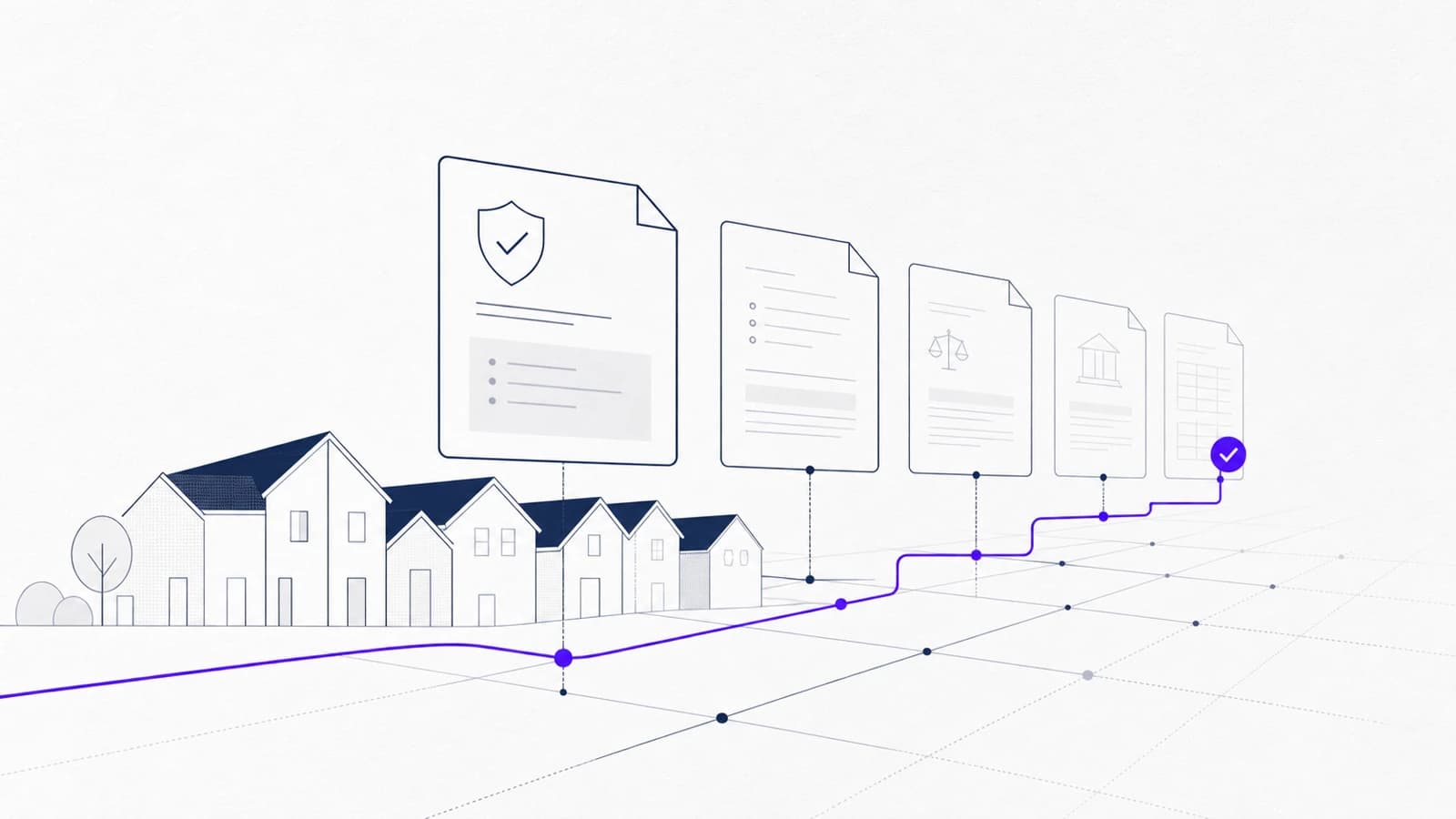
AI policy template for housing associations
A board-ready AI policy checklist for housing associations covering tenant outcomes, evidence, regulators and human review.
Sector playbooks
AI governance for housing association boards
Repairs triage, arrears scoring and complaint handling are going algorithmic. What housing association boards must evidence — and to whom.
See where your board stands before an inspector asks.
Take the free Board AI Scorecard, or book a short conversation about where your AI exposure sits across arrears, repairs and allocations.